Senate commerce committee Chair Ted Cruz (R-TX) began a meeting Wednesday meant to confirm President Donald Trump’s nominee to the Federal Communications Commission with a lopsided dais. To his right sat all 14 Republican members of the panel, including Senate Majority Leader John Thune (R-SD). To his left were about a dozen empty chairs — every Democratic member of the panel was absent.
Cruz said he’d learned the night before that Democrats intended to boycott the vote, though Democrats say they’d repeatedly raised their concerns about advancing a Republican FCC nominee without a Democratic one. “The administration has shown it’s willing to move Democrats,” Cruz said, pointing to Senate votes scheduled on bipartisan pairs of nominations to the Commodity Futures Trading Commission and the Securities and Exchange Commission.
And even though the Supreme Court confirmed his power to do so, Cruz said, Trump has not moved to fire any Democrats from the FCC, as he did at the Federal Trade Commission. “This is an ordinary nomination to fill a vacancy previously held by someone in the same party,” Cruz said. But in statements and comments to reporters outside the committee room, Democrats said that the process has been far from normal. Senate committees often vote on nominations to historically independent agencies in bipartisan pairs.
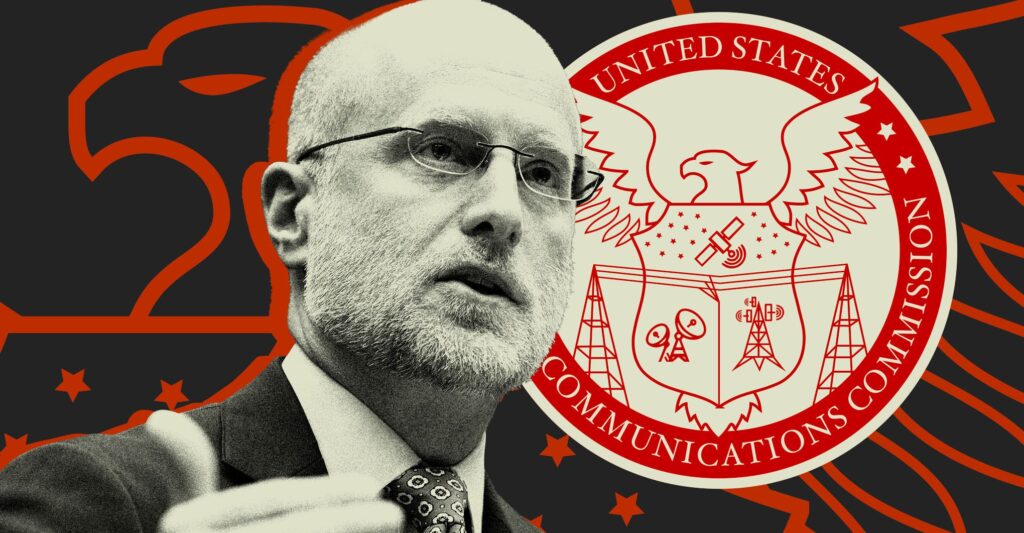
Confirming Danielle Thumann Severs, senior counsel to FCC Chair Brendan Carr, to become a commissioner at the agency would put the FCC at four total members — three Republicans and one Democrat, Anna Gomez. Gomez’s term has technically expired, though she can remain on the commission through next year unless she’s replaced. But Democrats fear that by confirming a third Republican to the FCC, Trump might finally fire Gomez, because he’d no longer need her present for a quorum to vote on key actions.
Democrats asked for Thumann’s confirmation vote to be withheld until her nomination could be paired with a Democratic nomination. One way to do that would be to renominate Gomez. But so far, the president has not offered any Democratic nominees for the commission. Democrats said they made their concerns clear to Cruz, and added, “This is not a problem we created, but a problem that the White House can solve.” The White House did not immediately respond to a request for comment.
In addition to the procedural concerns, Democrats worry about Thumann’s work as an adviser to Carr, and whether she was truthful about the matters she worked on. In a letter asking Cruz to delay her confirmation vote, Sen. Ben Ray Luján (D-NM) detailed his concerns. At the November 10th hearing where Thumann answered committee members’ questions, she testified that she had “not worked with the Chairman on any media-related issues,” Luján noted in the letter.
But documents obtained via a Freedom of Information Act request show that Thumann was “looped in” on various media matters, and “helped draft Skydance’s commitments that facilitated the 2 FCC’s approval of the Skydance-Paramount merger,” Luján wrote. “She also played a role in processing informal complaints related to CBS 60 Minutes alleged news distortion and she apparently orchestrated the Commission’s response to consumers regarding the Jimmy Kimmel controversy.” The FCC did not immediately respond to a request for comment on the matter.
Even Cruz admitted concerns with Carr’s handling of Kimmel’s comments in the aftermath of conservative activist Charlie Kirk’s killing. But at Wednesday’s meeting, he said he “emphatically agree[s]” that Thumann had resolved any lingering worries about that. He added that his JAWBONE Act, which the committee previously passed, could directly address First Amendment violations by government agencies of either party.
The bill would let individuals sue government officials if they illegally try to compel social media or broadcast companies to remove their speech. Sen.
Jerry Moran (R-KS), who’d similarly expressed concern over the Kimmel incident, said he found Thumann’s responses on the subject “comforting,” including in a phone call earlier that morning where he said he’d expressed his “serious interest in how the FCC protects and promotes free speech, including free speech on broadcast.” On the call, he said, “she was able to satisfy me once again in her answers, including an explanation for her role at the FCC and her lack of engagement on this type of issue as the FCC made decisions.” Speaking to reporters outside of the hearing room ahead of the meeting, Luján accused Thumann of lying to the committee.
“The questions that I have is if she was lying about this, what else is she lying about and what else is she hiding?” he said. Luján said he wants both Thumann and Carr to appear before the committee by the end of the year to answer lawmakers’ questions.
Asked if he’d support using the committee’s subpoena power or even pursuing impeachment against Carr when Democrats regain power next year, Luján said his vote to confirm Carr as a commissioner under President Joe Biden is among his biggest regrets, and that while he hopes Carr will testify voluntarily, “everything should be on the table here to be able to get answers for the American people.” When it came time to vote on whether to advance Thumann’s nomination for a final step of a vote on the Senate floor, all 15 Republicans voted “aye.” That gave Thumann enough votes for her nomination to advance to the Senate floor, where it’s expected to pass along party lines once scheduled.
Still, the clerk listed off the names of the 13 Democratic committee members whose seats remained empty. There was no response.
منبع: ورگ