Published3 hours ago
The government is prepared to force the entertainment industry to improve safeguarding practices unless rapid change is introduced, BBC Newsnight has learned.
Culture Secretary Lisa Nandy will tell a meeting of industry leaders next week that if their response to recent allegations is not robust enough, she is prepared to force participation in the industry body to protect whistleblowers, the BBC understands.
Participation in the Creative Industries Independent Standards Authority (CIISA) is currently voluntary.
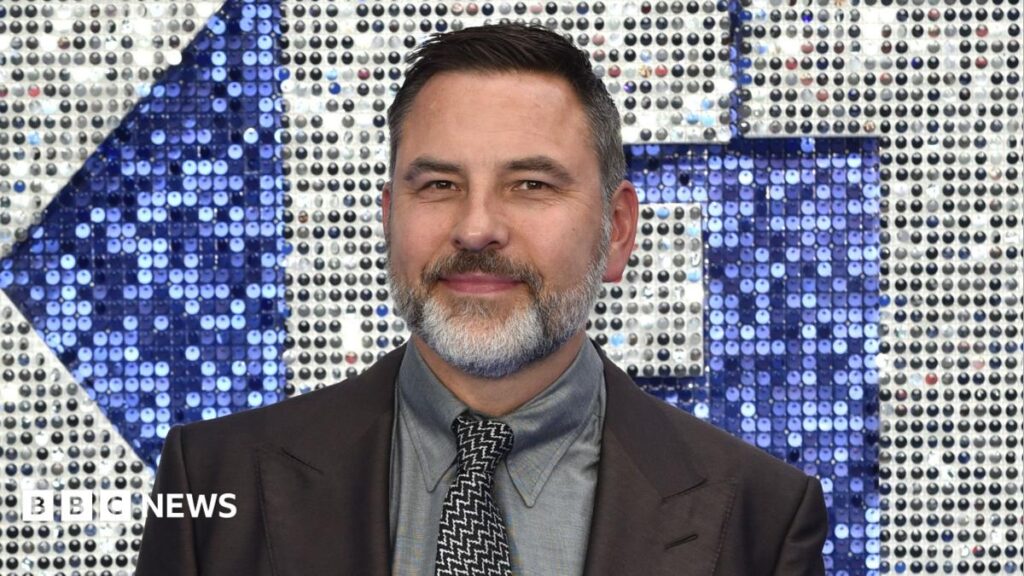
It comes after an investigation by the Guardian and ITV News alleged that entertainer David Walliams had been accused by several women of sexual misconduct and abusing his position, which he denies.
Nandy said earlier this week that she was summoning leaders from the broadcasting, publishing, film and entertainment industries to "draw a line" in the sand.
That announcement came after the publication of allegations against Walliams, as well as the sentencing of disgraced entertainer Russell Brand on charges of rape and sexual assault.
The allegations against Walliams were made as a part of a joint three-year investigation that was published after the entertainer lost a legal bid to stop the claims against him being made public. Walliams denies all the allegations against him.
BBC Newsnight understands that the culture secretary will deliver two messages at next week's round-table meeting.
In the first instance, she will tell industry leaders that they need to meet the moment, take responsibility and tackle issues of safeguarding on their own. But she will add that if their response is not good enough, the government might have to intervene.
Intervention could include forcing participation in the CIISA.
Multiple government ministers gave statements on Wednesday that called for further restrictions on the use of non-disclosure agreements (NDAs).
Women and equalities minister Bridget Phillipson told Sky News that there was "scope to go further" on legislation that restricted the use of such agreementsto ensure that the legal system was not being "abused in order to silence women".
"We cannot have a system where rich and powerful individuals – rich and powerful men – are able to silence women and stop things coming to light," she said.
Zelda Perkins, who spoke out against Harvey Weinstein, tells Newsnight of NDA challenges
Can't Buy My Silence founder Zelda Perkins told BBC Newsnight that there were "not enough safeguards" around high-profile people in creative industries and that joining the CIISA should be "mandatory".
The former assistant to jailed film producer Harvey Weinstein broke an NDA in 2017 when she spoke publicly about the movie mogul's mistreatment of women.
She has since founded a group that campaigns against NDAs being used in legal contracts or settlements to stop people from speaking out against their employers.
"There are no other regulatory bodies that are voluntary to join," Perkins told BBC Newsnight, referring to CIISA, noting that "obviously the people who need to be monitored are the people who are not joining".
"It's still very wild west in the the creative industries, people behave how they want," she said, adding that while "you can't change the humans, you can change the rules around them".
David Walliams accused of sexual misconduct after losing injunction bidPublished1 day ago
Met Police investigating more 'potential criminal allegations' about BrandPublished1 day ago
In the initial investigation published by the Guardian, some of the women accused Walliams of "grooming" them when they were teenagers. One now characterises her alleged encounter with Walliams at 15 years old as a "sexual assault".
In a letter to journalists published by the paper, Walliams said he was "not a sexual predator" and had not "broken the law".
He said he "realised that at times I behaved thoughtlessly towards other people I had casual sexual relationships with" and said he regretted not always taking "people's feelings properly into account".
If you are affected by any of the issues in this story, help and support is available at BBC Action Line.
Separately, a producer who worked on a TV show on which Walliams was a celebrity guest several years ago has told the BBC she was instructed to keep the comedian away from young female members of staff.
Speaking anonymously, she said she was warned that Walliams was "creepy" and "inappropriate", and that it was "well-known" he should not be put with young female runners.
She said she "wasn't at all surprised" when allegations about Walliams' behaviour emerged.
The Guardian reported that lawyers representing Walliams said he had never been warned nor "got into trouble" for messaging runners, and that he denied he behaved inappropriately and harassed young women in the workplace.
Comedian Kate Smurthwaite told BBC Newsnight that Walliams was a name that came up "over and over again", and that there was a "sense of worry" about him working with young people.
Watch: Comedian Kate Smurthwaite shares comments made over Walliams' alleged behaviour
"People were saying that they knew people who had worked with him and either felt very uncomfortable and left, or stuck around and felt that his behaviour was inappropriate," she said.
When asked why it had taken so long for such allegations to emerge, Smurthwaite said: "We all know that women who raise these issues, there's a backlash, which might be legal, it might be in terms of your career or your opportunities, it might be as subtle as being seen as a problem."
منبع: بی بی سی