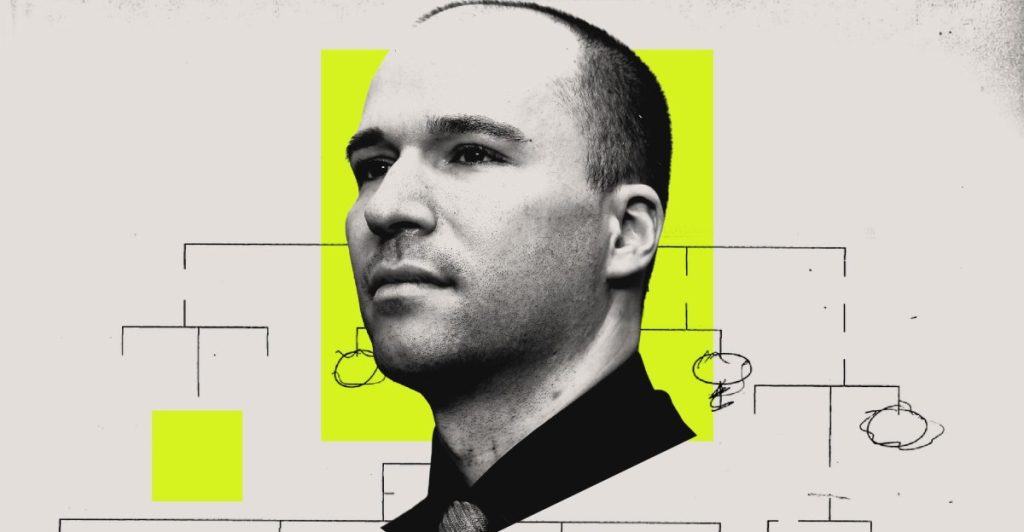
Today on Decoder, I’m talking to Verge senior AI reporter Hayden Field about some pure Decoder bait: the seemingly-endless org chart changes at OpenAI, and how all of them seem to consolidate power under cofounder Greg Brockman, the company’s president. While Sam Altman is the CEO and still OpenAI’s most public face, Brockman has amassed enormous power and influence within the top ranks of the company as other senior leaders have left in rapid succession these past few months.
[Image: https://platform.theverge.com/wp-content/uploads/sites/2/chorus/uploads/chorus_asset/file/24792604/The_Verge_Decoder_Tileart.jpg?quality=90&strip=all] Verge subscribers, don’t forget you get exclusive access to ad-free Decoder wherever you get your podcasts. Head here. Not a subscriber? You can sign up here. Brockman now oversees the company’s entire consumer and enterprise product teams, including ChatGPT, Codex, and its major infrastructure build out.
As Hayden recently reported, he is effectively now the day-to-day operational leader of OpenAI. This will have major effects on OpenAI as a company and its product strategy, at a time when it continues to cede ground to Anthropic in the enterprise and is preparing for a historic IPO. This is all against the backdrop of needing to turn a profit in the next few years and the company’s huge ambitions to replace both Google Search and the iPhone in the consumer market.
So I wanted Hayden to break down for me what’s going on at OpenAI, and the increasingly important role Greg Brockman will play in its future. Okay: Verge senior AI reporter Hayden Field on Greg Brockman’s consolidation of power at OpenAI. Here we go. This interview has been lightly edited for length and clarity. Hayden Field, you’re The Verge’s senior AI reporter. Welcome back to Decoder. Thanks. It’s great to be here. Always, always chaos when you’re here, Hayden. Absolutely. There’s never a calm week.
If there’s a calm week coming up, I know something even crazier is coming the next week. We should just rename the show The Real Housewives of AI. [Laughs] Honestly, that would be fitting. Straight up, that’s what we should do. A lot of personalities, a lot of feelings, a lot of relationships that people have really come to value over a long period of time. And a lot of lore. A lot of lore that goes between all these people for years and years and years. It’s crazy. And now they’re even putting out profiles on some of their spouses.
The circles and the people themselves are really interesting. Today the drama is about OpenAI and specifically Greg Brockman, who seems to be consolidating even more power at OpenAI. You just wrote a long story about this. It seems very clear that Greg is emerging as the central decision maker at OpenAI. Describe what’s going on. Greg has obviously been pretty influential at OpenAI for a really long time, but what’s different now is that he has so much control over the day-to-day operations in a way he didn’t before. He was always a cofounder.
He was always heavily involved. It was him, Ilya Sutskever, and Sam Altman for a long time, all in these email threads that came out during the Musk v. Altman trial. We saw them all talking about the future of OpenAI, what it should look like, and all their strange dynamics with Elon Musk. But Brockman was in a big-picture role before, and now he’s increasingly taking on so much power in the day-to-day. Altman has been focusing more on the big picture, the IPO stuff, and the direction of the company at large.
Meanwhile, Brockman is amassing all this power day-to-day as other executives leave. He’s been in control now of Codex, of its enterprise business, the consumer side. There are four arms of the company right now and he’s in control of all of them. It’s been really interesting to see how that’s happened over the last few months. Greg is a character in the AI story. Certainly inside of OpenAI, he’s been a central figure in a lot of the company’s drama over time. So if you’ve been paying attention to the AI industry, you’re familiar with him.
But if someone haven’t, explain who Greg is and why he’s such a notable figure both in AI and at OpenAI. He has been on my radar for seven years now. He’s been on other people’s for even longer. He dropped out of MIT to join Stripe way back in the day. He was Stripe’s CTO during its really early explosive growth phase. He left in 2015 to cofound OpenAI. That’s how he came on the AI radar. Ever since then, he’s been a really influential figure.
He, Ilya Sutskever, and Sam Altman were all heavily involved in the drama with Elon Musk really early on, raising money, trying to lure people over to OpenAI, hire top talent, and figure out who was going to control AGI in the event they ever made it. There’s a lot going on there. In the years following, Mira Murati joined and Brockman, Sutskever, Murati, and Altman became the four main players here. These were the most talked-about people at OpenAI. You saw them in the headlines the most. They had the most power at the company.
And then when the board coup happened in 2023, that’s when Brockman flew onto the scene in a new way. He had been behind the scenes a little bit, under the radar. He was not really doing that many public interviews. I interviewed him in 2020, but it’s not like he was a talking head. You weren’t seeing that much of him unless you were really watching the company and the industry. But when Sam Altman got fired by the board, Brockman was so incensed that he quit immediately.
He and Altman were going to start their own thing, or were potentially going to lead a department at Microsoft. That’s when he was making waves in a new way because he was hellbent on the drama. Brockman said, “Okay, if Sam goes, I go.” That’s when he became Sam’s right hand in a new way. Before that, he was just one of the many execs. They were close, but the board coup made them closer than ever. That’s also what made Sam know that he could trust him in a new way and thereby later greenlight him getting more power.
This was a big bet in the politics of the organization. Mira was going to become the new CEO for five minutes. Then there was going to be another new CEO and it was unclear who would stay and who would go. Justifiably, Altman did not know who he could trust in that moment, except Greg Brockman was ride or die. He said, “I’m leaving. I’m going.” The five minutes that they were going to start a new division of Microsoft were some of the most hilarious five minutes in tech history. But Brockman had basically made it clear he was ride or die for Sam.
Over time, that bet has paid off. That move has paid off. Even during that board coup moment, it was not clear that Sam would ever come back. I remember I was backpacking in Patagonia at the time and I didn’t have a laptop, but I wrote six articles on my phone. It was a crazy time. It seemed like Brockman and Altman were going to be fine, but just be on their own.
Of course, all the hundreds of employees signing a letter that they would leave if Sam was not reinstated is what got the ball rolling on him coming back and then pulling an UNO reverse on all the board members who had voted to oust him, except one. That was a big moment where he didn’t know who he could trust. Some of the people who he had trusted the most were the ones who voted for him to be fired. That went a long way with him that Brockman quit as well. Ever since then, we’ve seen Brockman positioned in the public eye a little bit more.
He’s been in the press more. This summer is when he really amassed a lot more power after a couple other executives left, and he’s now in control of quite a lot of pillars of the company. What’s really striking is, yes, we can talk about 2023 and the board coup and Sam going and coming back and who was going to stay or go then, but actually this year has been more dramatic in terms of executive departures from OpenAI. Just since April, the list is staggering.
I’m just going to run down it: Bill Peebles who ran Sora; Kevin Weil, who was head of product at Instagram and then VP of OpenAI’s science arm; Fidji Simo, who was supposed to be head of product and was at one point the AGI chief, left on health leave and then just never came back; Kate Rouch, the Chief Marketing Officer; Srinivas Narayanan, the CTO of B2B; Brad Lightcap, who was the former CEO and the head of special projects; and then just recently Denise Dresser, the Chief Revenue Officer, who is an important character if your company’s about to IPO.
That is a lot of people, and it seems like Brockman just took all of their roles as all of those people left. Is that what’s happening here? More or less. Some of them definitely affected his position less than others. For some of them, like CMO Kate Rouch, leaving didn’t really give him that much more power. But what was interesting is Simo, the ex-chief of AI at the company, is the one whose absence left a huge gap for Brockman to fill. He took over a ton of different aspects.
As you just alluded to, a lot of the people who had just left the company had also recently changed roles. Through one way or another, a lot of these people leaving created a power vacuum that Brockman could then capitalize on. It’s not like he had this master plan of amassing power, but either way, he ended up with a lot of power. What is interesting is when Brad Lightcap transitioned roles, for example, one of these other people took over his COO responsibilities. Guess who it was? Dresser. Then she leaves.
Now some of those responsibilities fall to Brockman. It didn’t all happen cut and dry, but in one way or another, people switching roles and then leaving the company, he ended up with a ton more power. I can’t even calculate the ratio really of how much power he ended up with. Now he’s in control — to give you some context — of the entire product strategy of the company, which is obviously incredibly important when you’re about to IPO and you’re getting a lot of pressure to turn a profit.
He’s in charge of the company’s entire scaling arm, as well as core product and platform; all of consumer, which includes health, commerce, personal finance, ChatGPT, and other consumer-facing stuff; and core infrastructure, ads, data science, and growth. What isn’t he in charge of, really? You know what I mean? I want to talk about Fidji Simo for one more second here. She was the former CEO of Instacart, but before that she was a really high-ranking executive at Meta. She ran the Facebook app. She was in charge of a lot of monetization.
When she came to OpenAI, it felt like her role was to turn the consumer version of ChatGPT into a product. There were lots and lots of people leaving Meta to go to OpenAI for a while, such that basically we had reported that every all hands at Meta was about, “What are you going to do about OpenAI? They’re taking all of our people.” You just saw this exodus of people from Meta going to OpenAI in various ways, led by Fidji Simo, in a moment where it felt like what they wanted to do was take on Google as a big consumer product supported by ads.
It’s funny, Altman actually copped to that ambition on the David Senra’s show last week — here he is, giving Peter Thiel credit for saying OpenAI should compete directly with Google: > Sam Altman: He’s like, ‘The power of this is the power of the Google text box, it’s a text box you can type anything into and it does the right thing. Clearly, the empty text box worked for Google so why don’t you just double down on that?’ That’s pretty straightforward and that’s what they did.
Altman says they went super hard at it — being the empty text box, taking the Google business model, which is one of the best business models in internet history. That was a big bet, and they hired Fidji Simo to go run that bet. But she left, and that does not seem to be the emphasis anymore. The emphasis is on Codex, on enterprise, on competing with Anthropic. What’s left of that? Was that just a misfire and she had the wrong ideas? Is it still the plan? This seems like the question about OpenAI.
Some of it has fallen by the wayside, which we’ve seen for a bunch of stuff that OpenAI has tried in the past year or two. They vowed to stop doing all their side quests, which is ironically something that Simo herself wrote in an internal memo. Several episodes ago, you were on and we just talked about the series of code reds at OpenAI. Right now they’re focused on the key revenue drivers, which are enterprise and coding. That’s really what they’re all-in on.
They’re also, of course, really focused on building a “super app,“ which is supposed to incorporate all this stuff together, and making that super app better. Besides that, they’re trying to cut the fat and operate as a leaner business, which has been helped by some of these executive salaries being cut. They’re trying to look better on their balance sheet when they IPO. There’s a lot of pressure to do that, especially when SpaceX just IPOed at a crazy valuation and Anthropic is apparently gunning to exceed that. We’ll see if that actually happens.
When they changed Simo’s title from CEO of applications to CEO of AGI deployment, that was the most Decoder thing of all. I looked at their org chart changing and I thought, “This isn’t going to last.” Over and over and over again, they keep reassigning people. And then as you say, they leave and we see one person take over those roles and consolidate power. We’ll come to the IPO in a second, but where is Sam Altman in all of this? It seems like he should be running OpenAI. He really likes focusing on the long-term stuff.
The events of the last couple of years and all of the lawsuits have shown him that maybe he isn’t supposed to lead direct teams in a huge way. He has a few direct reports, but should he really be involved in the minutiae of the day-to-day operations? Maybe not. Altman has said before, and in blog posts that the company put out years ago, that this is the trend that they’ve been following.
I remember a year or two years ago, the company would put out summer blog posts saying that different C-suite executives’ roles would be changing slightly, and Sam would be focusing a little bit on the longer term, on research. This is just a continuation of that trend, in my opinion. As we know — and this is a big Decoder thing as well — the more power you have at a company, the higher your title, the less you probably are involved in the actual day-to-day operations, especially at a tech company. This is another example of that.
Sam has always been interested in the research and the long-term stuff. Brockman is an engineer. He was described really early on at the company as an “engineering workhorse that pushed to build scaled-up systems that would train the AI and make it work.” So he’s always been seen internally by employees as a can-do person. He makes things happen and he has the engineering training that is required to scale a system. So I could see investors being thrilled about this.
I could also see Altman saying, “I know this guy’s in my corner.” Altman already cleaned out the board. He’s surrounded by people that are going to support him. He trusts Brockman. So he says, “I actually don’t really want to be involved in the operational stuff quite as much. I want to be focused on the direction of the company. So you handle that. You’re an extension of me. I can trust you. Go ahead.” That’s what I think is happening here. You’ve talked to Brockman before. I’ve met him. He just did a video with our friend Joanna Stern.
You can see he’s pretty direct. He answers the questions. What kind of character do you think he’s going to be as a person who’s operationalizing OpenAI? Is this “get stuff done, make the numbers go up” situation? Or is this more expansive of an approach? It’s going to be interesting to see how he handles this much responsibility, especially this many disparate arms of the company. He’s a really can-do person. He has a lot of engineering training.
He’s pretty respected within the company, but I do think there’s going to be a lot of natural tension here because consumer, enterprise, health, and personal finance are really, really intense departments that handle data extremely differently. And then you’ve got all the core infrastructure stuff and the behind-the-scenes stuff that makes everything work. We’re going to see a lot of natural tension arise, especially because this company has a limited amount of funds.
Even if it’s a huge number, it’s still limited in some way, especially now compared to a few years ago. They have a limited amount of compute. That’s something that every executive at OpenAI has run into problems with — allocating the compute. The research side of things says they don’t get enough sometimes, or the product side says they need all of it. It’s going to be really interesting to see how he squares all this, especially as someone who’s probably trying to make everyone happy.
He’s not going to be able to, and so he’s going to have to make some hard decisions. This brings us to the IPO, because the IPO is where those hard decisions have to pay off. There’s been a lot of talk about OpenAI playing catch-up to Anthropic, particularly in the enterprise and with coding. There was a Wall Street Journal story last week that said OpenAI’s revenue in Q2 lagged behind Anthropic’s. Obviously, Anthropic will tell you they’re profitable even though we haven’t actually seen their numbers and we don’t know how they calculate it.
You’ve mentioned the IPO several times now. SpaceX just went public. Big IPOs are all the rage. What role is the IPO playing in all these changes? Is it focusing the company down? Is it making that equity pay off? Is it needing to raise more capital? What’s the shape of it? It’s absolutely behind a ton of these changes. It is normal to see a lot of changes in the C-suite ahead of an IPO.
But some of the sources I spoke to within the industry, who study the way these IPOs typically happen in tech, said that the interesting and unusual thing here is how many C-suite execs left in such a short timeframe, because they know that looks bad for the company. It’s one thing if you need to cut salaries, make the balance sheet look a little bit different, make the company leaner. That’s normal. It is an easy way to do that, to not replace someone. We can only speculate how much each of these people’s salaries was.
This is an easy way, cut and dry, to help out the balance sheet. But doing all of this in this amount of time reminds me of what we were talking about last time on Decoder about Google and DeepMind and how maybe Demis Hassabis didn’t leave when Jeff Dean did because they didn’t want to make the company look bad. Now at OpenAI, people are leaving left and right — sometimes within 24 or 48 hours. Brad Lightcap, for instance, just got a new job as special projects head. Then a couple months later he’s out, even after being at the company for so many years.
Part of it’s probably just cashing out. You can make a lot of money if you’re an exec and the company’s about to IPO and you have a lot of stock options. But it is unusual, my sources said, that it’s happening in this short amount of time. The IPO is interesting for a number of reasons, but to me, the most clarifying is that OpenAI is up against Anthropic. There are numbers coming out, reported numbers, about Anthropic’s finances that make that company look pretty good. The company hasn’t really challenged them in public.
So we have to assume that they’re happy that there’s reporting out there that the numbers look good for them. But all of that is enterprise. They’re selling Claude to big enterprises, to the government. It’s effective. Maybe their token prices have high margins. It’s unclear what the internals of Anthropic’s business look like, but the numbers that we can get look pretty good and they support a big IPO. There’s a lot of excitement around Anthropic for that reason. That’s Anthropic as an enterprise software provider. That’s their business.
It’s a thing it’s focused on. It’s all they do. OpenAI has taken a lot of shots. You’re talking about cost-cutting ahead of an IPO. Are they shutting some things down? Are they closing the aperture on all the things they’re trying to do to compete with Anthropic ahead of this IPO? It’s interesting because I’ve seen a slight shift from OpenAI. Earlier this year, the company was saying, “Enterprise and coding. That’s what we’ve got to focus on. We have to make money.
We have to compete with Anthropic.” Now, however, ahead of the IPO, OpenAI is getting a little bit of different advice. Yes, the company needs to focus on those things because obviously that’s where the money is. But now it’s also being told, “You also have to differentiate yourself from Anthropic. You can’t just be a copy that’s lagging behind. You have to be doing something different.” OpenAI is going to really lean into consumer and hardware as well.
One attorney told me that for OpenAI to be successful in the public eye and in investors’ eyes, the company needs “hardware and consumer products to sell to consumers, and luckily, that’s something that Brockman has experience with.” It’s hard to do everything, but they’ve had to narrow a ton and then slightly widen again and say, “Consumer is what we’re really known for.” They’re saying, “We’re the Kleenex of AI right now because of how we’re known in the consumer world.” People say, “I’m going to ask ChatGPT,” or, “I ChatGPT’d it.” And they’re talking about just using AI in general.
Maybe they weren’t actually using ChatGPT, but that’s the way they’re referring to things a lot of the time. So OpenAI knows they need to capitalize on that. That’s one way they can be different from Anthropic. Of course, Anthropic also offers that, but they’re much more known for enterprise and that is why they’re making so much money. But OpenAI is leaning into hardware. The company has Jony Ive. It has to not cut some of this stuff entirely because then it’s going to look like Mark Zuckerberg with Meta.
It can’t go all-in on something and then just completely cut it, or they’re probably worried about being a laughingstock. You have to really cut the true fat, which they did with a lot of their side projects. But as far as consumer, hardware, enterprise, and coding, those are their main bets right now. We’re going to see them really double down on that heading into the IPO. Come on, Hayden. Aren’t we actually in the metaverse right now? Technically, you and I are in the Metaverse together right this second. It worked. Absolutely. It happened.
Should have made an avatar. Technically we’re here in our bodies on the internet. Yep, that’s true. What argument can you have except that the metaverse definitely worked and Mark Zuckerberg was super right about all of it? The consumer business is really hard. The scale of the play you need to make the consumer business work is on the order of fully overtaking Google, which seems very challenging. In hardware, you have to replace the iPhone. If you do anything other than replace the iPhone, people still have their iPhones.
And then you’re going to lose to Instagram every single time. Have they said anything about how they plan to do either one of these things? Because replacing Google with a Google-level monetization engine seems very hard. Replacing the iPhone — even if you have Jony Ive — such that people don’t still have their iPhones, seems very hard. Neither one of these things has been in any kind of focus for me at least. Like we talked about last time, I really am skeptical. Hardware is hard.
I’ve seen way too many companies crash and burn when they try to make an AI hardware device. It’s going to look beautiful because Jony Ive is in charge. But as for how useful it’s really going to be, especially in the era of AI populism when there’s a huge backlash against using AI, I don’t know how excited people are going to be on a broad scale to have something visible pinned to them or in their ears or on their table where you can tell they are using AI.
It’s going to be really exciting for a subset of people, but for the broader public, Meta’s glasses are still uncool, still being called pervert glasses. With AI hardware, you’ve got a steep hill to climb. Let’s talk about what happens next with OpenAI, because those are the challenges. What you have now is a new leader who is, as you said, running most of the company. Greg Brockman was just on CNBC last week. He basically defended the turnover.
He said this: > Greg Brockman: “I’d say fundamentally, we’re a very resilient organization… If you look over the years, there have been different eras where we have different sets of leaders in place. I’m constant, Sam is a constant. I think that we are stronger because of that resilience and diversity.” So this might be what Greg Brockman has to say: “All these people are gone, but I’m still here.
Sam’s still here, and the company’s still the same.” Do you think it’s just the thing that he has to say? Or do you think there’s something more real about OpenAI as a company, where you have these two leaders who are clearly ride or die for each other and you can swap in and out all these other executives and the company will still have its own unique vision? He would like us to think the latter, but it’s more of the former. It’s never good when you have a bunch of people leaving at once.
It’s never good when you’re constantly restructuring or reorganizing the company. It’s bad all the way down. Employees are probably feeling weird. They have a new person in charge. They’re being shuffled between different teams. Their teams are headed by one person and then their boss’s boss is someone else, which probably means their bosses are weird. It’s not great for productivity, especially heading into such an important time for OpenAI.
Even if it’s a move that makes sense and is good long term, it’s still going to be weird for people in the short term. In some ways the latter is true in terms of Brockman and Altman having been at the helm from the start. Someone who’s been there for eight months who leaves is not going to have as much of an impact. But we’re seeing some people that have been there for a really long time leave as well, like Brad Lightcap. He was someone that I had tracked for years and years.
All of a sudden he’s out, after switching roles, and now he says he’s going to start something new. He says he’s implying he’s still going to work with OpenAI in some way, shape or form. He and Altman had a really friendly exchange on X after he left, but a lot of it’s for show. They’ve got to make sure that people aren’t skittish about the company right now. It’s something he just has to say. But it’s also true that if there were two people that would be the most influential if they left, and luckily those two are still there, Brockman and Altman.
You’ve mentioned the public antipathy towards AI several times now. There is just a lot of anti-AI sentiment out in the world. And it’s pretty politically coded, although it scrambled some political lines. Hating AI is pretty bipartisan. Hating data centers is pretty bipartisan. We’ve got a lot of reporting about that on the site. Brockman is into politics. He donated $25 million to MAGA Inc. He’s one of the top donors to Trump overall.
Do you think him being so openly political will help or hurt him as he becomes more of a character, more of a visible leader of OpenAI? It’s going to help the company from the outside, because they’re trying to push a lot of stuff through during the Trump administration and they really want a voluntary regulation framework. They want to be in Trump’s ear in a good way.
It’s going to hurt Brockman internally, because a lot of employees at tech companies that I’ve interviewed in the past year, no matter what company they work at, are incredibly angry if their CEO or their C-suite isn’t doing enough to speak out against some of the Trump administration’s decisions. Now, Brockman isn’t just not speaking out against them, he’s also supporting the admin with tens of millions of dollars. I could see this really hurting him from the inside. Maybe some people don’t take him seriously. Maybe we will see some departures.
It’s going to help the company from the outside, just because when you’re giving a lot of money to Trump, he seems to let you curry favor with him. We’ll see. To be clear, we’ve seen Sam Altman stand next to Trump and announce data center projects. So whatever reputation OpenAI was going to have because of its leaders, it might already have, but the specific political giving seems new. And as we head towards the midterms, it seems like a new challenge for the leaders of the company to be openly associated with.
Do you think it’ll change any of the valence around data centers and AI, how the public feels about them? I don’t know that it’ll change that because we’ve been careening towards this for a while. People are really mad about data centers and it’s a bipartisan feeling, like you mentioned, and same with AI.
Sam Altman and other AI CEOs have said in the past month that they feel like AI has a big PR problem and that they haven’t done a good job of showing people the good parts of AI and how they need to do better to show people why they’re even building it in the first place. Maybe they do, but people have been told a lot of the good things about it and they’re still not thinking that they’re as good as the bad is bad. The AI industry is in for a rude awakening there.
But as for what you mentioned about Altman, yes, he and every other AI CEO have been at Trump’s dining table. They’ve been caught on hot mics praising him. It’s not something hugely new that Brockman’s giving this money, but what is new is that he’s giving it so much of it in a personal capacity, so much so that Altman even had to come out and say at some point, “Brockman only did this in a personal capacity. We’re not saying that we’re super behind him.” He also couldn’t really say they weren’t behind him, but OpenAI had to separate themselves a little.
That’s what’s interesting to me about this. It’s like the personal capacity of his giving has made so many headlines and OpenAI tried to distance itself a little bit, but not too much. Now they’re not going to be able to do that because he’s essentially running day-to-day operations. I’m very curious to see how that plays out. I don’t think we quite know yet, but as he becomes a more visible leader of the company, being that open about his politics, even in the context of the other big tech CEOs, is different. We don’t quite see that from all of them.
We see it from Elon, but everyone else plays it pretty safe. This is new, especially for a leader at OpenAI. All right, let’s end here. Let’s say it’s two years from now, OpenAI is public. Do we think Greg Brockman is the CEO and Sam is just the “chairman of raising money,” or whatever it is that he’s doing? I could see that happening. It would take a couple of big things to make that happen. Altman really likes being in charge, so I don’t think he’s going to go super quietly.
But if he ever needs to move on to a more big-picture chairman role, if the IPO doesn’t go so well or he gets dragged in the public eye or something and still needs to be part of the company but not the CEO, I could definitely see that happening. Especially because Brockman has a lot of ambitions. We saw his journal entries come out during discovery, during Musk v. Altman, and he was writing some pretty ambitious things.
“What will get me to a billion dollars?” He’s saying, “This is my one chance to be in charge.” There are a lot of entries that he’s writing about how he’s put his blood, sweat, and tears into the company and how he needs to be in charge in some way, shape, or form. He will probably be gunning for a role like that and he’d be happy to take it on. We’ll see what happens in the next few years. But I definitely don’t think that’s out of the question, especially because he’s been there since the beginning.
He has a lot of product experience and he’s clearly ambitious. The other thing that is interesting is, way back in the day, he wasn’t always so aligned with Altman all the time. In fact, Brockman and Sutskever, OpenAI’s chief scientist, were pretty aligned against Sam every once in a while. Not against him, but they were questioning him and pushing back. They were saying things like, “It seems like you really care about this CEO role. It seems like you really care about being in charge and having a lot of power in this way and that way.
How does this relate to your political ambitions? How does this relate to who’s going to control AGI? We really don’t want it to be a dictatorship.” Altman would probably be hard-pressed to give up the CEO title when he fought so hard for it, even 10 or 11 years ago. But if he ever does, it seems like Brockman would be happy to take it on. I will end by stating my prediction that I’ve been making almost the whole year now. I don’t think we will end 2026 with OpenAI as the same kind of company as when the year started.
Actually I would say, given all of this turnover, that prediction has already come true. Structurally, it is a very different company with very different goals than the year started. But I’ll just put that prediction to you. You cover the company way more closely than I do. Do you think there’s any way that OpenAI looks the same at the end of the year as it did at the top of the year? Absolutely not. When a company goes public, so many things change. Especially when the end of the year is only five months away. It’s a scary number of months away.
It’s tomorrow. Let’s say maybe not by December 31st, but six months from now, 100 percent it’s going to look different and probably sooner than that. They’re going to have to make a lot of changes. They’re going to be listening to their investors in a new way and they’re going to be beholden to them in a new way. There are only certain parts of this industry that make money and OpenAI is not in the lead in those parts. They’re going to have to go all-in on that type of stuff.
The type of research that they want to do to stay at the frontier, they can make a case for that. Money-wise, they can say, “Look, in order to stay in the lead, we have to do this long-term stuff a little bit.” But they’re not going to be able to go all-in on it all the time because it costs a lot of money — and they have a limited amount. We’re going to see a lot of the anxieties that we saw Brockman and Altman voice a year ago, two years ago.
I’ve been in the room with them where they’re talking about their fear that they’re running out of compute and how they’re going to scale. Their whole job for the next six months, the next year, et cetera, is scaling. They’ve had so many concerns about this. They’ve had so many fears about how they’re going to do this with their limited compute, especially now that they’re going public and they’re beholden to investors in a new way. There’s no way the company is going to look the same. Hayden, this has been great.
Thank you so much for being on Decoder again. We’ll have you back when another season of The Real Housewives of AI kicks off, which is probably going to be tomorrow at the rate we’re going. [Laughs] Absolutely. Thanks. Questions or comments? Hit us up at decoder@theverge.com. We really do read every email! Decoder with Nilay Patel A podcast from The Verge about big ideas and other problems. SUBSCRIBE NOW!
منبع: ورگ